What Price Should You Set? Markup Tiers & Buy Chance — TCG Card Shop Simulator
How customer buy-chance tiers from -20% to +60% govern shop sales, shelf pricing, and single-card tables.
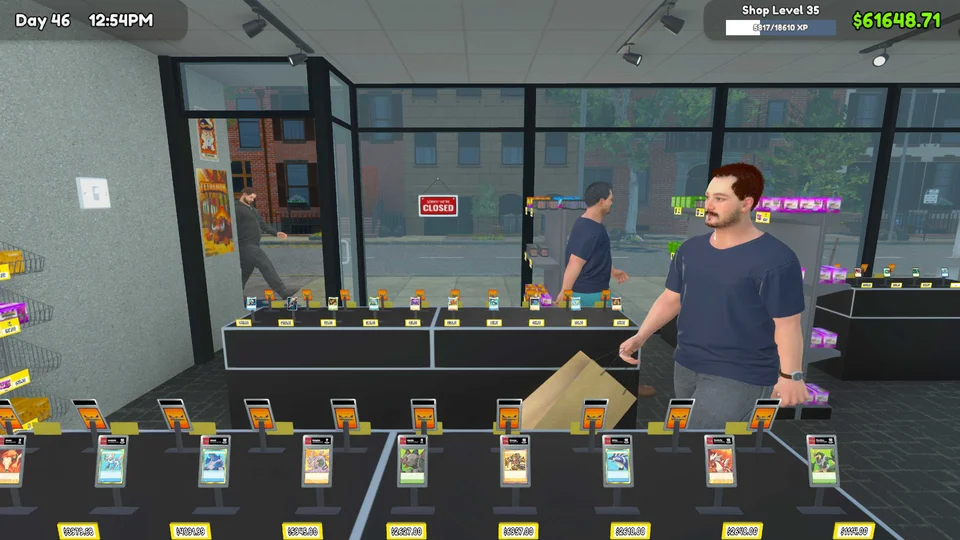
Setting an item price higher than the market price is required for profit, while customer buy chance steps down from 75% at 0% to +10% markup (Tier 4) to 60% at +10% to +20% (Tier 5) and 45% at +20% to +30% (Tier 6). Marking items 20% or more below market gives a 100 base buy chance (Tier 1), whereas going above +30% lowers the base chance to 15% (Tier 7) and then 0% above +60% (Tier 10). Read the full card prices guide for how base values and grading interact across the economy.
How Markup Tiers Control Buy Chance
Customer buy chance steps down across 10 discrete markup brackets tied to today’s market price rather than a flat dollar figure. Every item and single card rolls its underlying market value as a range per save, so the percentage gap between your sticker price and that current market price is what moves customers from one tier to the next.
| Markup vs Market | Base Buy Chance | Ratio Upper Bound |
|---|---|---|
| <= -20% | 100% | 0.805x |
| -20% to -10% | 95% | 0.905x |
| -10% to 0% | 90% | 1.005x |
| 0% to +10% | 75% | 1.105x |
| +10% to +20% | 60% | 1.205x |
| +20% to +30% | 45% | 1.305x |
| +30% to +40% | 15% | 1.405x |
| +40% to +50% | 5% | 1.505x |
| +50% to +60% | 1% | 1.605x |
| > +60% | 0% | — |
- Discounted stock (-20% or lower): Tier 1 hits a 100 base buy chance at a 0.805 price-to-market upper ratio, clearing shelves fast at a discount.
- Moderate markdown (-20% to -10%): Tier 2 gives a 95 base chance up to a 0.905 ratio, while Tier 3 (-10% to 0% at market) gives a 90 base chance up to a 1.005 ratio.
- Standard profit zone (+0% to +20%): Tier 4 (+0% to +10%, 1.105 upper ratio) drops to a 75 base chance, and Tier 5 (+10% to +20%, 1.205 upper ratio) drops to 60.
- High-markup tiers (+20% to +40%): Tier 6 (+20% to +30%, 1.305 upper ratio) sets base chance at 45, and Tier 7 (+30% to +40%, 1.405 upper ratio) lowers it to 15.
- Dead-stock zone (above +40%): Tier 8 (+40% to +50%, 1.505 upper ratio) sits at 5, Tier 9 (+50% to +60%, 1.605 upper ratio) falls to 1, and Tier 10 above +60% drops to 0.
Setting prices above market value is required to earn a profit, with Tier 4 (0% to +10% above market) holding a 75% base buy chance, Tier 5 (+10% to +20%) holding 60%, and Tier 6 (+20% to +30%) dropping to 45%. Check our price calculator to test cheap-item damping and profit math on low-dollar stock.
Why Market Value Matters for Singles and Packs
Because daily market shifts change a card’s reference price overnight, a tag placed at +20% today can slip into a lower buy-chance bracket tomorrow if market value dips. Check our guide on daily price changes before leaving high-markup singles untended across multiple days.
| Border Variant | Foil | Base Price Range |
|---|---|---|
| Basic | Non-Foil | $0.02 – $0.24 |
| Basic | Foil | $1.00 – $6.00 |
| First Edition | Non-Foil | $0.20 – $1.20 |
| First Edition | Foil | $3.00 – $12.00 |
| Silver Edition | Non-Foil | $0.75 – $3.00 |
| Silver Edition | Foil | $12.00 – $36.00 |
| Gold Edition | Non-Foil | $2.00 – $6.00 |
| Gold Edition | Foil | $50.00 – $120.00 |
| EX | Non-Foil | $7.50 – $19.50 |
| EX | Foil | $300.00 – $650.00 |
| Full Art | Non-Foil | $30.00 – $70.00 |
| Full Art | Foil | $975.00 – $2100.00 |
In the Tetramon set, a Common non-foil Basic card starts between $0.02 and $0.24 before drift, whereas a Legendary foil with a Full Art border starts between $2590.20 and $5703.30. Small cent rounding barely shifts a $2590.20 card’s ratio, while even a tiny markup jump on sub-dollar singles changes the percentage gap quickly unless buffered. Even a generous buy-chance tier fails when shoppers walk in with small wallets, so check our customer carry budget guide before stocking high-priced graded slabs.
Where to Price and Display Single Cards
Once you open packs worth selling individually, place singles on dedicated card furniture so browsing shoppers can inspect and buy them.
The 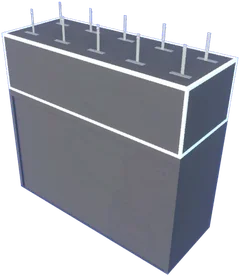 Card Table unlocks at shop level 3 for $400 with 10 card slots and a 0.1 decoration bonus, letting you put your collection out for sale early. Later, the
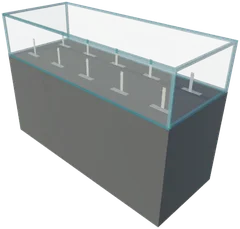 Card Display Table unlocks at shop level 20 for $1,000 with 10 card slots and a 0.25 decoration bonus for displaying cards rather than selling them.
Browse our most valuable cards list to see which pulls belong on display rather than in bulk boxes.